

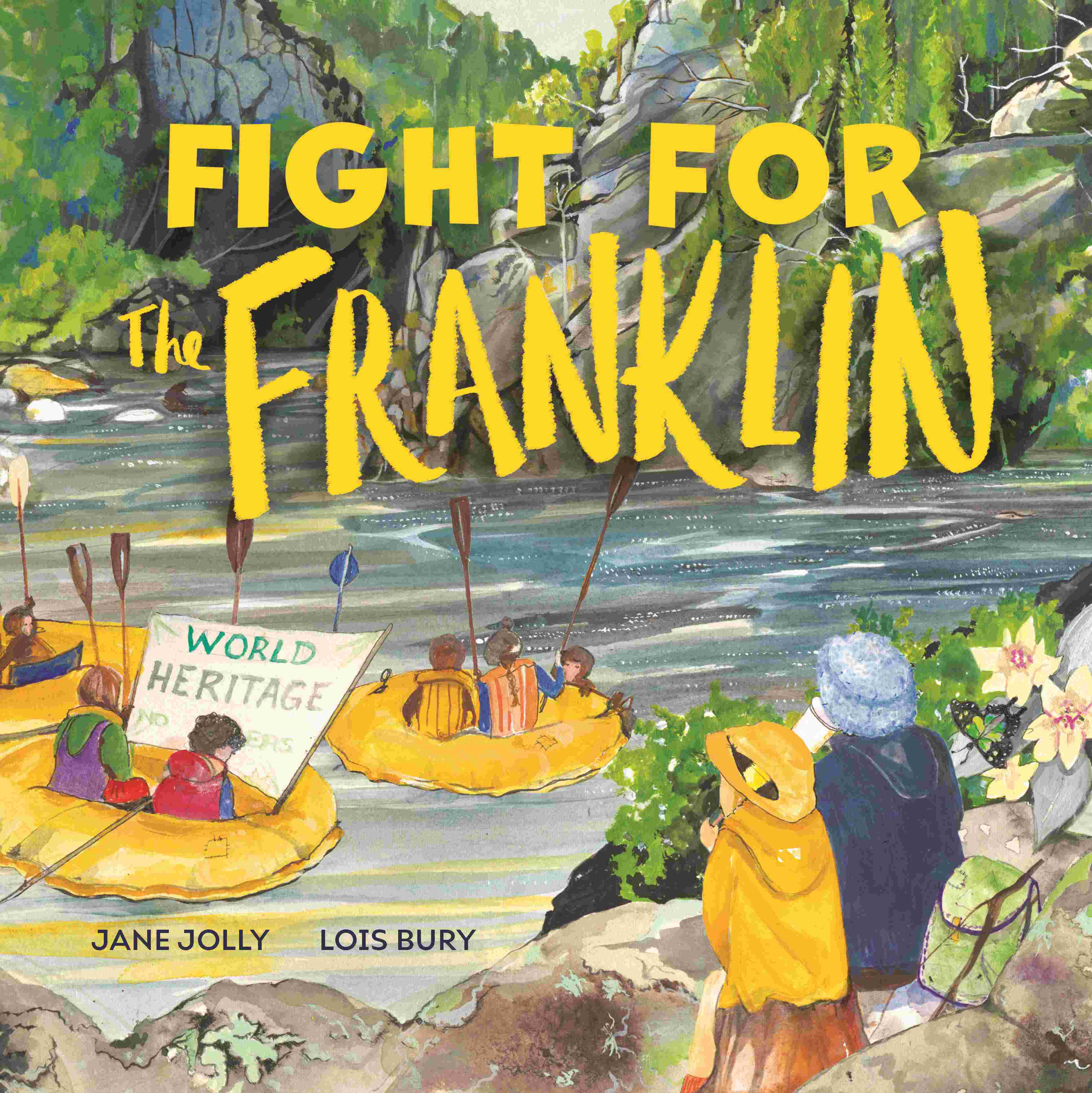
Title: Fight for the Franklin
Author: Jane Jolly, illustrated by Lois Bury
Genre: Fiction
Publisher: NLA Publishing
Published: 1st September 2026
Format: Hardcover
Pages: 40
Price: $24.99
Synopsis: ‘So what did you do, Grandpa?’ asked Fern.
‘We set up a protest camp right in the middle of these towering giants. We hung rainbow flags, and we sang songs. We were one big family fighting for this river, cold and wet but full of hope. I’ve never eaten so many lentils in my life!’
Fern tried to imagine it.
Join Fern as she learns about the fight to save Tasmania’s Franklin River from being dammed. This was the biggest environmental protest in Australia’s history. There were marches across the country, a protest camp in the middle of the forest and bulldozers on barges met by yellow inflatable boats.
Backmatter includes educational spreads on the Save the Franklin campaign, how to be a change-maker, and personal reflections from blockaders such as Bob Brown, Michael Mansell and Jill McCulloch—illustrated with historic photographs
~*~
Fern and her grandfather are exploring Tasmania’s Franklin River when he tells her the story of how it was once almost dammed and destroyed. He tells her about the 1978 fight to stop it, from the protests to marches and the fight to save the river.
Fern can’t imagine a word without the river, but there could have been huge changes to the environment, with losses that would have altered things forever. But Fern’s grandfather was part of an important movement that proved not all progress will help, that there are things we can do to progress without sacrificing things that matter, or that help our world thrive.
This book is based on a what happened in 1978, including a photo taken that formed part of one of the big protests, and has been researched well, evoking the voices of the people who were there. It’s about people power, protest power and the ability of people to make change through their voice. It’s something that can really impact decisions and if enough people are heard, like they were in 1978, a protest can make real change and help advocacy movements for many issues that affect people.
This book also gives the stories of the Kutikina and Aboriginal protesters, ensuring that everyone who was involved was acknowledged in some way, and has great end matter. There are comments about the impact of protesting and the history of this protest and who was involved and what they did. These historical aspects complement the fictional story nicely. Books like this that the NLA are great to introduce kids to history and stories that might not be acknowledged or found elsewhere.
And whilst the characters are fictional, the non-fiction information is perfect for an educational setting. It can be used at any level of education to help children learn about the environment, historical protests and the impact a protest can have. It also talks about what people can do to protest and how this works in Australia. Fictional stories are a great way to explore history when done right, and for the right audience. They can be engaging and bring history to life, and help children learn about the world that has come before them, and what these people and events have done to change the world.
This is an informative and educational book that will find its audience and have a big impact.
Discover more from The Book Muse
Subscribe to get the latest posts sent to your email.


1 thought on “Fight for the Franklin by Jane Jolly, illustrated by Lois Bury”