
Title: Silver Linings
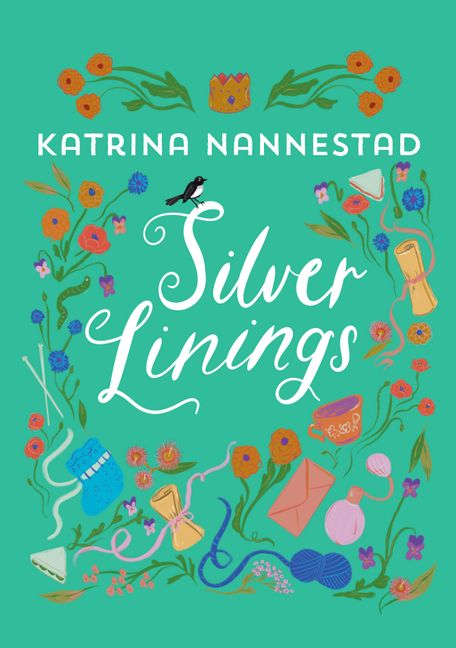
Author: Katrina Nannestad
Genre: Historical Fiction
Publisher: ABC Books/HarperCollins Australia
Published: 1st November 2011
Format: Hardcover
Pages: 304
Price: $19.99
Synopsis: A new heartwarming novel set in 1950s Australia from bestselling author Katrina Nannestad
Nettie Sweeney has a dad, three big sisters, a farm full of cows and a cat called Mittens. But it’s not enough. She longs for a mother. One with a gentle touch and sparkles in her eyes. Instead, she has Aunty Edith with slappy hands, a sharp tongue and the disturbing belief that peas are proper food.
When Dad marries Alice, all Nettie’s dreams come true. The Sweeney home overflows with laughter, love and, in time, a baby brother. Billy. The light of Nettie’s life.
Then tragedy strikes. The Sweeney family crumbles. Nettie tries to make things right, but has she made everything so much worse?
From multi-award-winning Australian author Katrina Nannestad comes a heartbreakingly beautiful and uplifting historical novel. Life and death. Weddings and floods. Coronation joy and post-war grief. Nettie Sweeney and her community experience it all. Together. With humour, kindness and love.
SOME OF KATRINA NANNESTAD’S AWARDS
The Girl Who Brought Mischief – Winner of the 2014 NSW Premier’s Literary Award for Children’s Literature (The Patricia Wrightson Prize)
We Are Wolves – Winner of the 2021 ARA Historical Novel Prize (Children and Young Adult)
Rabbit, Soldier, Angel, Thief – Winner of the 2022 ARA Historical Novel Prize (Children and Young Adult) and Winner of the 2022 ABA Booksellers’ Choice Book of the Year Award (Children’s)
~*~
Five-year-old Nettie Sweeney has grown up on a Northern NSW farm with her father, three big sisters, and her cat called Mittens, but no mother. She’s had Aunty Edith, who is nothing like the sparkly, gentle mother Nettie longs for. Instead, Aunty Edith has a sharp tongue and slappy hands. It’s 1952, and Queen Elizabeth II has just come to the throne following the death of her father, King George VI. As the novel opens, Nettie and her sisters, Mu (Muriel), Ruby, and Colly (Colleen) are waiting for their father to arrive home with their new mother. Just before he does, Nettie finds a dead piglet, whom she calls Rosemary and decides to put away in a special drawer. This moment is the first time that Nettie experiences death and loss – she never knew her mother, who died when she was born. Nettie believes babies are brought by the stork – and when she finds out her new mother, Alice, is having a baby, she keeps asking when the stork will bring the baby.
Baby Billy is born, and the family feels complete – until tragedy strikes, and everyone deals with the grief in their own way. Alice takes to her bed, Aunty Edith removes every hint that there was a baby from the house, and everyone else in their community is at a loss of how to act. Nobody mentions Billy’s name, but Nettie feels and knows that they need to talk about him. This loss affects her more than any other loss, more than any of her squabbles with her friend from school, Robyn. As everyone else seems to move on with their lives, Nettie is determined to keep Billy’s memory alive, and people at school start treating her differently – nicely, sympathetically, and she finds that there are ways to be happy. Ways to try and help Alice.
The book is written in a child’s perspective, spanning ages five to a bout seven or eight during the early to mid-1950s, the generation born during and after World War Two shaping the narrative. The way they were taught to be in the world, how they were told to behave, and the way they were told they had to cope with things – that children like Nettie were meant to be taught how to behave like a proper young lady, and what language to use and about not using certain things that were meant to be special. It shows that even as a young child, Nettie was observant and understood what was right and what didn’t feel quite right, and that she knew the way Aunty Edith acted was wrong, especially when Alice came home. At its heart, this book is about a family coming together and then working their way through grief and learning to acknowledge that grief. It’s powerful because it is a family story – one that during the 1950s was more common than it is these days, where losing a baby was dealt with quite differently, even if there were people like Nettie and Alice who were determined to remember Billy.
I loved Nettie, because her heart was always in the right place, even if she got a few things wrong along the way. She wanted to help heal her family, and I wanted to reach out and hug her throughout the novel. She was observant and understood more than people gave her credit for, which made her an interesting character, constantly trying to be herself, please everyone, be a good daughter, sister, and student and in some ways, fit in with what her town and society expected of her. As the themes of grief, post-war trauma, trauma of all kinds, and change across the board are explored throughout, Nettie maintains a childlike innocence that always sees the good change she can make, but also, someone who doesn’t always know how to find the words to tell the truth when she needs to or wants to. Like many of Katrina Nannestad’s novels, the stories are told by children, whether in the 1950s, in various stages of World War Two, or adventuring across Europe with a dog and a writer. She knows how to be serious and funny at the same time, and knows how to tug at the heartstrings, whilst hinting at a promise or reassurance that one day, things will be okay again. Her novels often end with hope after the devastation and tragedy, whilst giving her characters a strong drive and voice in each novel.
I also love her creation of families and representations of families in a variety of ways, where each one is unique to the story, yet they all feel grief, joy, sadness, and many other emotions in a variety of ways. Her stories show that human emotions are a spectrum, and the range of experiences people have can change us in a variety of ways. This has been something that has drawn me to her books and I think that Silver Linings explored family dynamics and loss very well against the backdrop of the post-war world and a new monarch. Another lovely Katrina Nannestad book. And as Nettie reminds us – there are silver linings to everything in life.
Discover more from The Book Muse
Subscribe to get the latest posts sent to your email.

 The Book Muse
I love the details on the cover. Also, you got me with the line about travelling Europe with a dog and a writer!
LikeLike
Thank you – that one is another series of Katrina’s – The Girl, the Dog and the Writer!
LikeLiked by 1 person
A series! Wonderful!
LikeLike