

Title: Last Man Out
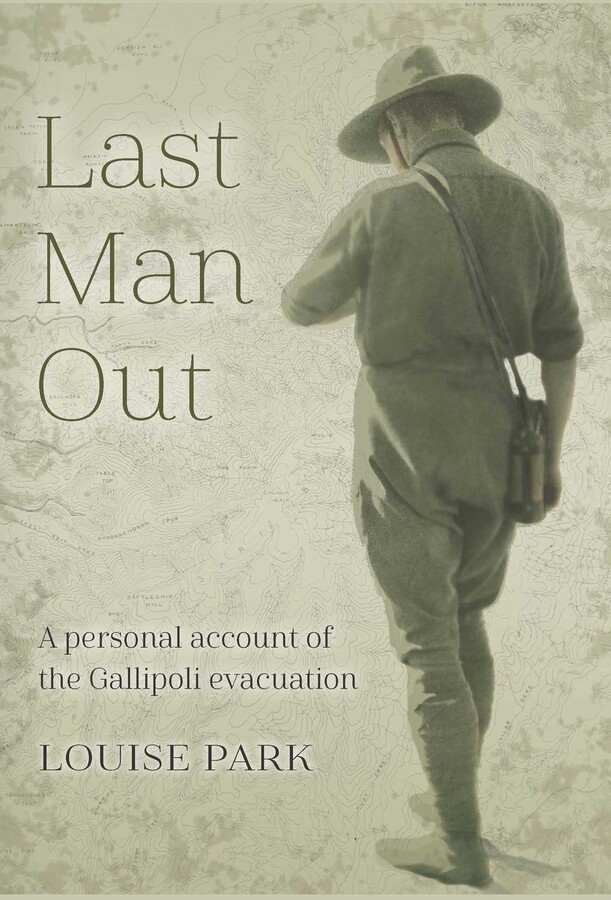
Author: Louise Park
Genre: Non-fiction
Publisher: Wild Dog Books
Published: 1st April 2023
Format: Flexiback
Pages: 80
Price: $24.99
Synopsis: The evacuation from Gallipoli of Australian and New Zealand troops was a logistically incredible undertaking. The exhausted young men were to slip away by ship in the dead of night.
But…
Someone needed to remain behind to cover for their fellow soldiers. This was a mission that almost certainly meant death.
Would it be you?
Would you volunteer to be the last man out?
And so, the rivalry begins. Who will be chosen to stay on until the end?
Who will hold fast to the last to allow tens of thousands to slip away silently from Gallipoli?
Only the fittest, the most gallant and capable will be chosen. The pick of the whole force, we are told. And the message is clear: the rear guard of honour will be killed or captured.
The rear party, the most daring men of all, doomed.
John Alexander Park grew up in England and served in Africa, the Afghan War, and the Boxer Rising before settling in Australia. The assassination of Archduke Franz Ferdinand of Austria in 1914 sparked The Great War – or World War I. On 1st March 1915, John joined the Australian Army in Sydney and was promoted to Sergeant before being assigned to the 19th Battalion. He was 36 years old and a seasoned serviceman when he arrived at Gallipoli.
And he was the last man out.
~*~
Gallipoli – the 1915 campaign that saw the ANZAC legend and identity formed as the Australians and New Zealanders fought a battle on the Gallipoli Peninsula in Turkey alongside each other and other soldiers from the British Empire. This was the Great War, sparked by the assassination of Archduke Franz Ferdinand, and in 1915, for seven months, they fought in the trenches against the Turkish army. One of these men was the grandfather of children’s author, Louise Park, and he was John Alexander Park. As the campaign wore on, a decision to withdraw from the Peninsula was made – and over several days in late December 1915, the ANZAC troops were withdrawn – but someone had to be the last man out – the last one to leave after everyone else had left and set up the trenches to make the Turkish army believe they were still there. And that man was John Alexander Park, Louise’s grandfather.
Louise’s story about her grandfather based on his letters, published articles and notes about his experience and what happened at Gallipoli in 1915. Gallipoli is an event that is well-known in Australia – because it was one of the first major events – a war, in fact, that Australians were part of soon after Federation in 1901, and the day the ANZACs landed has become known as ANZAC Day. Over the years, there have been many stories about Australians in World War One, and many stories and movies about the Gallipoli campaign. The National Museum of Australia, the Australian War Memorial website and many others discuss the evacuation ordered by Lord Kitchener – many of these sources that I looked at when writing this review, to see what other sources said line up with the dates and facts, but don’t always mention Louise’s grandfather, and that is where this book comes in. A personal account lets readers see what happened through the eyes of someone who was there – to show the people behind the facts, as they are the ones who were there. Who fought the battles, watched their mates die and had to bury them – and leave the dead lying in a cemetery on the Peninsula. History textbooks and official records can give us the background – the personal stories like this give us the human face.
John’s story is evocative and important – one that we need to know, because even though it is his story, his account shows what they went through during the campaign, as well as the decisions that led to the evacuation, which occurred in stages, and throughout the book, John keeps track of those on Gallipoli, counting down as the evacuation occurred between the eighth and the twentieth of December following Kitchener’s visit and the evacuation, which shows a distinct and important image of what it was like – living over one hundred years in the future, we can’t experience this first hand, so we need stories like this to understand what happened and the impact it has had on our history, the ANZAC legend, and the people left behind and connected with those who were fighting at Gallipoli. I found this book to be a powerful read because I was able to see what happened through the eyes of someone who was there – and in particular, someone who was there to the end. It is the kind of book that would make a good resource for students at all levels from primary to university study, but also, for those who are interested in knowing more about the evacuation as someone who was there experienced it. It means that we can understand how the evacuation happened, and the inventive preparation taken before the ANZACs left in stages, so they didn’t alert their enemy to what they were doing. It is a tribute to Louise, her family, her grandfather, and the ANZAC spirit, and what Gallipoli means to so many Australians.
Lest We Forget.
Discover more from The Book Muse
Subscribe to get the latest posts sent to your email.

 The Book Muse
6 thoughts on “Last Man Out by Louise Park”