

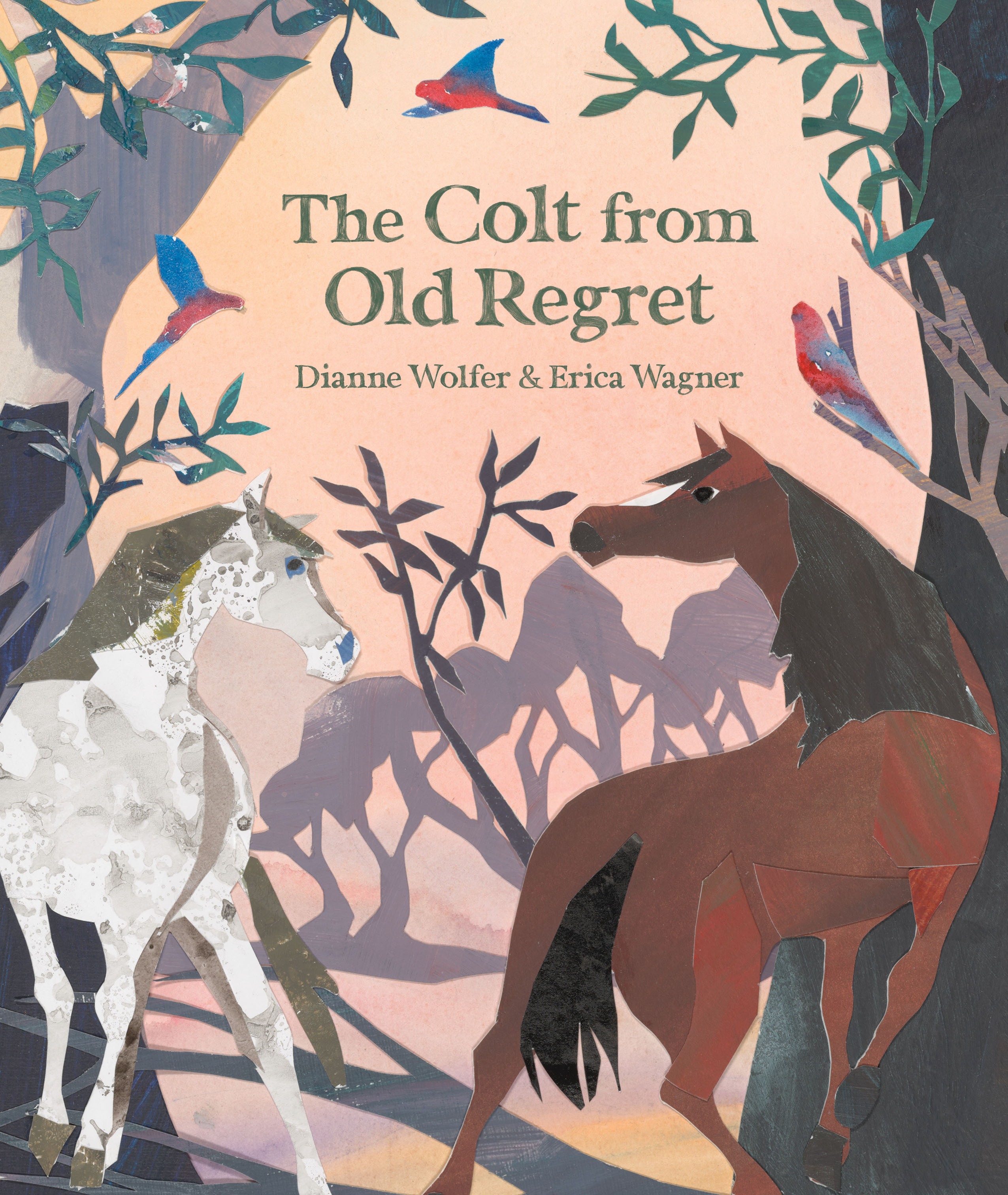
Title: The Colt from Old Regret
Author: Dianne Wolfer, illustrated by Erica Wagner
Genre: Poetry
Publisher: NLA Publishing
Published: 1st April 2025
Format: Hardcover
Pages: 48
Price: $29.99
Synopsis: Tossing his mane, the Colt from old Regret tears through the scrub. Stones clatter and crimson rosellas shriek as he canters higher.
You may have heard the story of the man from Snowy River and his fearless ride through the mountains. This is Colt’s story, of nickering mares and a rearing stallion. What does Colt see, feel and smell as he charges through the bush? Will he escape the snapping stockwhips, to find shelter in an alpine meadow?
Beloved children’s author Dianne Wolfer responds to The Man from Snowy River, creating an essential companion to the original poem. With exquisite collages by Erica Wagner, this book is a new classic in the making.
Includes Banjo Paterson’s The Man from Snowy River, as well as information about bush poetry, brumbies, the Snowy Mountains and more.
~*~
The Man from Snowy River by Banjo Paterson is one of Australia’s most well-known bush poems. It tells the story of the search for a colt that got away, and the people who searched for him – Clancy of the Overflow and the Man from Snowy River. Dianne Wolfer’s new book tells the story from the colt’s perspective, as he runs free with the wild brumbies, away from the station and into the bush. In this version, readers get to experience what the colt does – the smells, the sights, the wind in his mane as he gallops through the alpine meadows and mountains. Away from the stockwhips. But what will happen to Colt – will he break free or will he be taken back?
Dianne Wolfer’s response to the poem captures the magic of the original, whilst adding to its story and the world that it came from. Reading both side-by-side, as you can do in this book, illustrates the power of bush poetry and the mysteriousness of the bush that Banjo Paterson and people he knew would have experienced in the 1890s – the uncertainties that stockmen faced, and their responses. It doesn’t rewrite the poem, but allows Colt’s voice to be heard, and merely shows a different perspective of the event. It’s written in prose or free verse, so it can be read as a story or a poem, and feels like it has the same rhythm as the original poem. What this response does is show how deeply ingrained a poem like this is in Australian literary culture – and is one of many ways to respond to it. Anyone who writes something related to the poem will do it in a way that works for them, but this one allows the horse to speak.
And that’s the beauty of the poem – it sits just as well in the nineteenth century as it does in the twenty-first century. We still get the same sense of place and time in Dianne’s version that we get from Banjo’s version. Both put us into the time and place evocatively, and in this edition, Erica Wagner has created beautiful collages to accompany the text and additional information at the back about bush poetry, brumbies and Banjo Paterson. In doing so, it provides context to the poem, and a fuller understanding of what Banjo Paterson’s society was like. And of course, how the poem came to be.
There are many texts and poems that have shaped Australian literary landscapes and identities over the years, and more voices are always being added. Each one has something important to say and contribute, and each one may have its own focus and purpose. Like those, this book speaks to a specific time, place and poem that everyone knows or has at least heard of, especially the first verse. This is a book that contributes something to our understanding of the poem, and contextualises it to ensure the historical setting around the poem is shown through the notes. And also reminds people to remember that any literature is a snippet of experience and culture, that it may not have everything everyone wants in it, but it is a window into a certain experience. And because there are lots of books out there covering all sorts of experiences and topics, this is one that everyone can get something out of and come away with a deeper understanding and appreciation of the original poem and the times, places and experiences that informed it.
Discover more from The Book Muse
Subscribe to get the latest posts sent to your email.

 The Book Muse
7 thoughts on “The Colt from Old Regret by Dianne Wolfer, illustrated by Erica Wagner”